

When multiple high-interest payments consume your monthly cash flow, the first question is not whether you need relief, but whether you can realistically repay every dollar you owe. Mortgage debt consolidation and a consumer proposal answer that question in opposite ways: one restructures your debt with a new loan, while the other legally reduces the total amount you must repay. This guide to Mortgage Debt Consolidation vs. Consumer Proposals: Understanding Your Options walks through the mechanics, eligibility, credit impact, and decision factors for each.
We help homeowners think through this trade-off regularly. Your available home equity, your credit score, and the stability of your income often determine which route is available and which is best for your long-term financial health.

Understanding Your Debt Relief Options
What is Debt Consolidation?
Debt consolidation is a loan that pays off multiple unsecured debts—such as credit cards, personal loans, and lines of credit—so you make a single monthly payment to one lender instead of several. The loan can be unsecured or secured, and your goal is typically to secure a lower interest rate than the average rate on your existing debts. You still repay the full principal amount, but a lower rate can reduce the total interest you pay over time.
What is a Consumer Proposal?
A consumer proposal is a formal legal arrangement administered by a Licensed Insolvency Trustee. You offer your unsecured creditors a fixed monthly payment, usually over a maximum of five years, and in most cases the total amount you repay is less than what you originally owed. Once filed, interest on the included debts stops, and creditors are legally bound to accept the terms if the required majority of them vote in favour. A consumer proposal does not include secured debts like your mortgage or car loan, but those obligations continue separately.
Mortgage Debt Consolidation: Using Home Equity
When we refer to mortgage debt consolidation in this context, we mean borrowing against the equity in your home to pay off higher-interest unsecured debts. This can be done by refinancing your existing mortgage or using a home equity line of credit. Because the new debt is secured by your property, the interest rate is often much lower than what you pay on credit cards. However, this strategy increases the amount you owe on your home and extends your repayment timeline, which requires careful planning.

Eligibility Requirements
Eligibility Criteria for Debt Consolidation
Debt consolidation through a lender typically requires a good credit score, a stable source of income, and a debt-to-income ratio that shows you can manage the new payment. If you are using home equity, you must also have enough equity available and meet the lender’s mortgage qualification rules, including property appraisal and income verification. Lenders may decline an application if your credit history shows recent missed payments or if your total debt load is too high relative to your income.
Eligibility Criteria for a Consumer Proposal
Eligibility for a consumer proposal does not depend on your credit score. Instead, you must be unable to pay your debts as they come due, or your total debts must exceed the value of your assets. The law sets a maximum threshold for unsecured debts that can be included (excluding a mortgage on your principal residence), and you must have some ability to make the proposed payments. A Licensed Insolvency Trustee assesses your income, expenses, and assets to determine whether a proposal is a viable option.
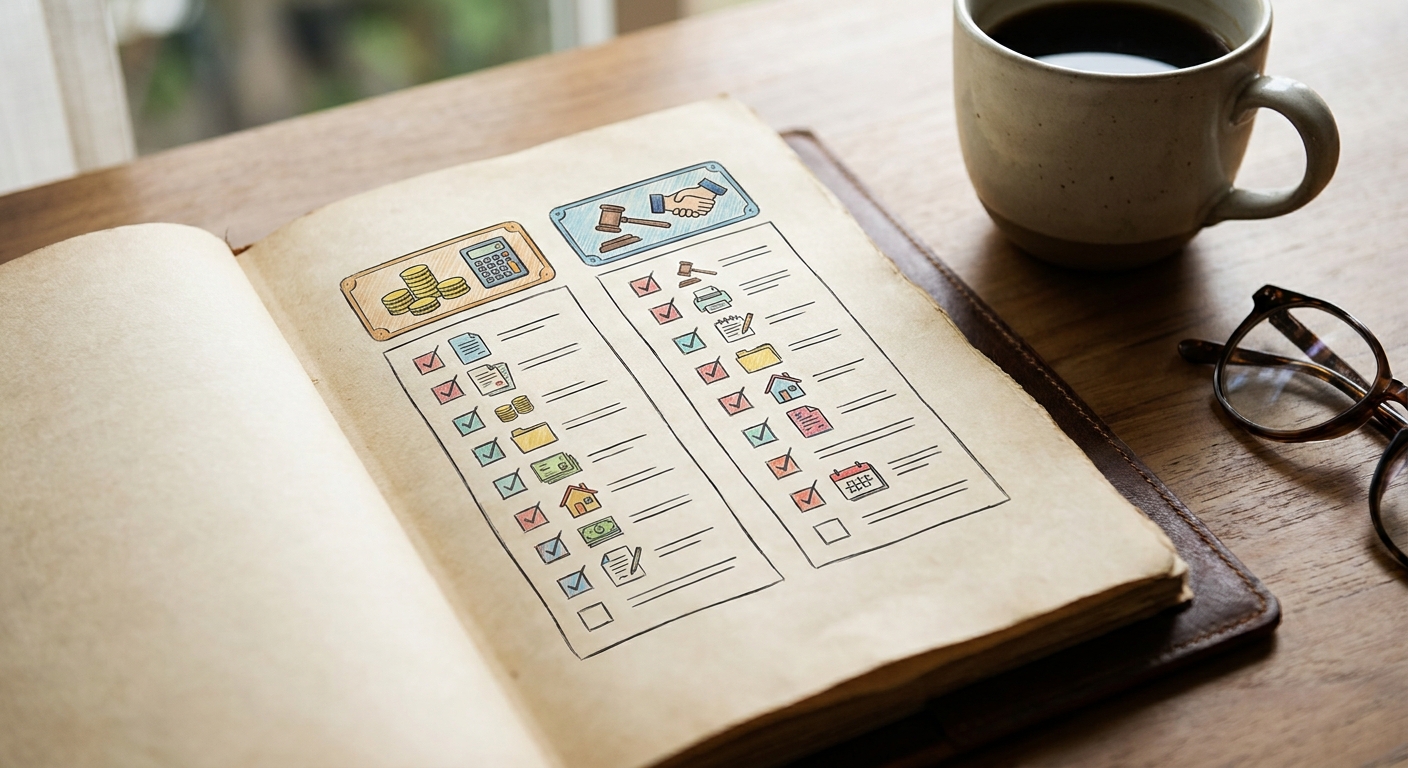
Comparing the Impact on Credit, Legal Protections, and Assets
How Each Option Affects Your Credit Score
A debt consolidation loan causes a temporary drop in your credit score when the lender performs a hard credit inquiry, and the new account may lower your score slightly at first. Over time, if you make every payment on time and reduce your credit card balances, your score can recover and may even improve. A consumer proposal has a more significant and longer-lasting impact: it is reported as an R7 rating, and the record remains on your credit report for three years after you complete the proposal or six years from the date you filed, whichever comes first. The score drop is typically larger, but for someone already behind on payments, the proposal can stop further damage from late marks and collections.
Legal Protection and Creditor Actions
Debt consolidation offers no legal protection from creditors. If you do not repay a creditor with the consolidation loan, that creditor can still call, send collection letters, or take legal action. A consumer proposal triggers an immediate stay of proceedings, which stops collection calls, wage garnishments, and other legal actions by unsecured creditors while the proposal is in effect and after it is accepted. This protection is one of the key reasons people choose a proposal when they are facing aggressive collection activity.
Asset Protection and Collateral Requirements
Debt consolidation loans may be unsecured, but when you use mortgage debt consolidation, your home is collateral. That means if you miss payments on the refinanced mortgage, you could put your home at risk of foreclosure. A consumer proposal does not require you to surrender assets, and because it does not create new secured debt, your home is generally not put at additional risk. However, you must continue making your mortgage payments because the mortgage itself is not included in the proposal.
Administration and Process
Who Administers Each Option
Debt consolidation is arranged through banks, credit unions, online lenders, or mortgage brokers like us. The lender approves the loan based on your creditworthiness and, if applicable, your home equity. A consumer proposal can only be administered by a Licensed Insolvency Trustee, who is a federally regulated professional. You cannot file a consumer proposal through a bank or mortgage broker, but we can help you understand whether seeking a trustee is the right next step.
The Process and Timeline
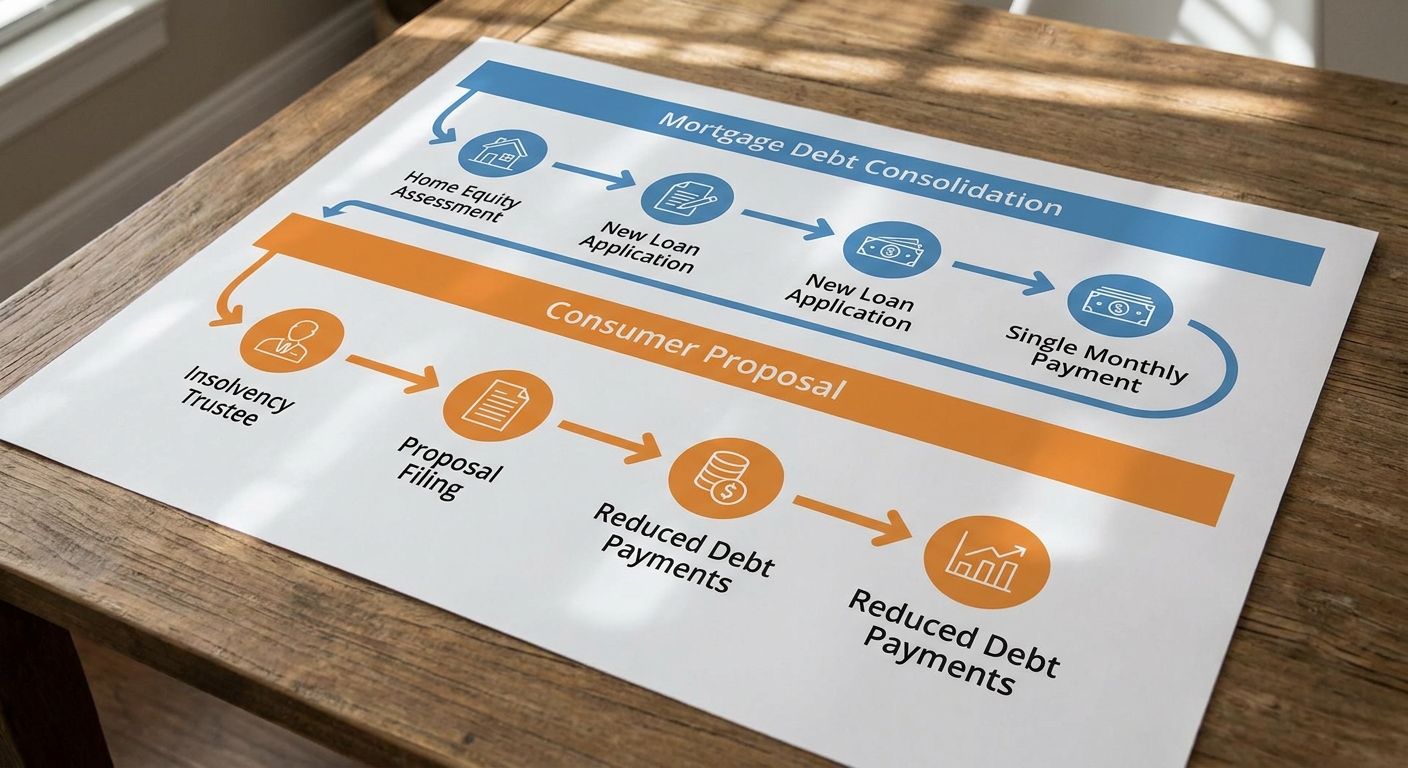
For mortgage debt consolidation, the process starts with a review of your equity, income, and credit. You submit an application, the lender orders a property appraisal if needed, and after approval the funds are used to pay off your listed debts. The entire process can take a few weeks depending on lender processing. For a consumer proposal, you meet with a Licensed Insolvency Trustee for a confidential review, the trustee drafts a repayment offer, and your creditors have 45 days to vote. If creditors holding at least 51% of the total dollar value of your debts accept the offer, the proposal becomes binding on all unsecured creditors. You then make the agreed payments, which typically last up to five years, and upon completion you receive a certificate of full performance.
Pros and Cons of Each Option
Pros and Cons of Debt Consolidation
- Pros: Combines multiple debts into one payment; may lower your interest rate; you repay the full amount, so credit impact is generally moderate if you keep up with payments; you retain control of all your assets.
- Cons: Requires good credit and income to qualify; using home equity adds risk to your property; no legal protection from creditors; you still owe the full principal, and lower monthly payments may extend how long you are in debt.
Pros and Cons of Consumer Proposals
- Pros: Reduces the total amount you repay; interest stops on included debts; fixed and often lower monthly payments; legal protection from collections and wage garnishment; you keep your assets.
- Cons: Significant negative impact on your credit rating (R7) for several years; not all debts can be included; you must be insolvent to qualify; the proposal is a matter of public record; future creditors may view you as higher risk.
How to Choose Between Mortgage Debt Consolidation and a Consumer Proposal
Start with a simple affordability test: can you realistically afford to repay 100% of your unsecured debts with a new loan, even at a lower interest rate? If yes, and you have sufficient home equity, good credit, and stable income, mortgage debt consolidation may be the less damaging path. If you cannot afford the full repayment, or if your credit has already suffered so much that you cannot qualify for a consolidation loan, a consumer proposal may be the better option despite its credit consequences.
Your home equity is a pivotal factor. Using equity to consolidate debt only makes sense if the new mortgage payment is manageable and you have a realistic plan to avoid accumulating new credit card balances afterward. If your debt load is so high that even a lower interest rate leaves you struggling, reducing the principal through a consumer proposal may be the safer route for your long-term stability. We often help homeowners calculate whether the equity they can access is enough to cover their unsecured debts without overextending the mortgage.
Conclusion
Mortgage debt consolidation and consumer proposals solve different problems. Consolidation restructures debt, lowers interest, and preserves credit when you can afford full repayment. A consumer proposal legally reduces what you owe and stops collection actions when you cannot. Your decision should be based on your monthly cash flow, home equity, credit standing, and the level of creditor pressure you face. If you want to review whether mortgage debt consolidation fits your situation, contact us for a personalized look at your home equity and debt repayment options.