

When you need to access home equity, the biggest decision is often whether to take out a second mortgage or break your current mortgage to refinance. The choice comes down to one core trade-off: do you keep your existing term and rate, or do you reset them to pull out a larger lump sum? Many homeowners overlook the long-term cost of losing a low fixed rate, while others underestimate the burden of a second monthly payment.
In this guide, we explain how each option works, where they differ, and how to decide based on your remaining term, penalty exposure, and cash needs. You will learn the advantages, risks, and qualification factors so you can move forward with confidence.
What Is a Second Mortgage?
A second mortgage is a separate loan secured against the same property as your existing mortgage. It sits in second position behind your first mortgage, which means if the home is sold or foreclosed, the first lender gets paid before the second lender. Because the lender takes on more risk, second mortgages typically carry higher interest rates than your primary mortgage, even though the loan amount may be much smaller.
Most second mortgages are structured as a lump-sum loan with a fixed term and regular monthly payments. You continue paying your first mortgage exactly as before, and you add a new payment for the second loan. This lets you tap equity without altering the original mortgage contract.

What Does It Mean to Break Your Current Mortgage?
Breaking your current mortgage means ending the contract before its term is up, usually to refinance into a new mortgage. The new loan pays off the old balance and may be larger than what you owed, allowing you to take cash out of your equity. You end up with one mortgage again, but it has a new rate, new term, and possibly a new amortization.
Breaking your mortgage often triggers a prepayment penalty, especially if you have a fixed-rate mortgage and interest rates have fallen since you locked in. The penalty can be substantial because lenders calculate it based on the interest they lose when you pay early. You also have to requalify under current lending rules, which may be harder if your income or credit situation has changed.
Key Differences Between a Second Mortgage and Breaking Your Mortgage
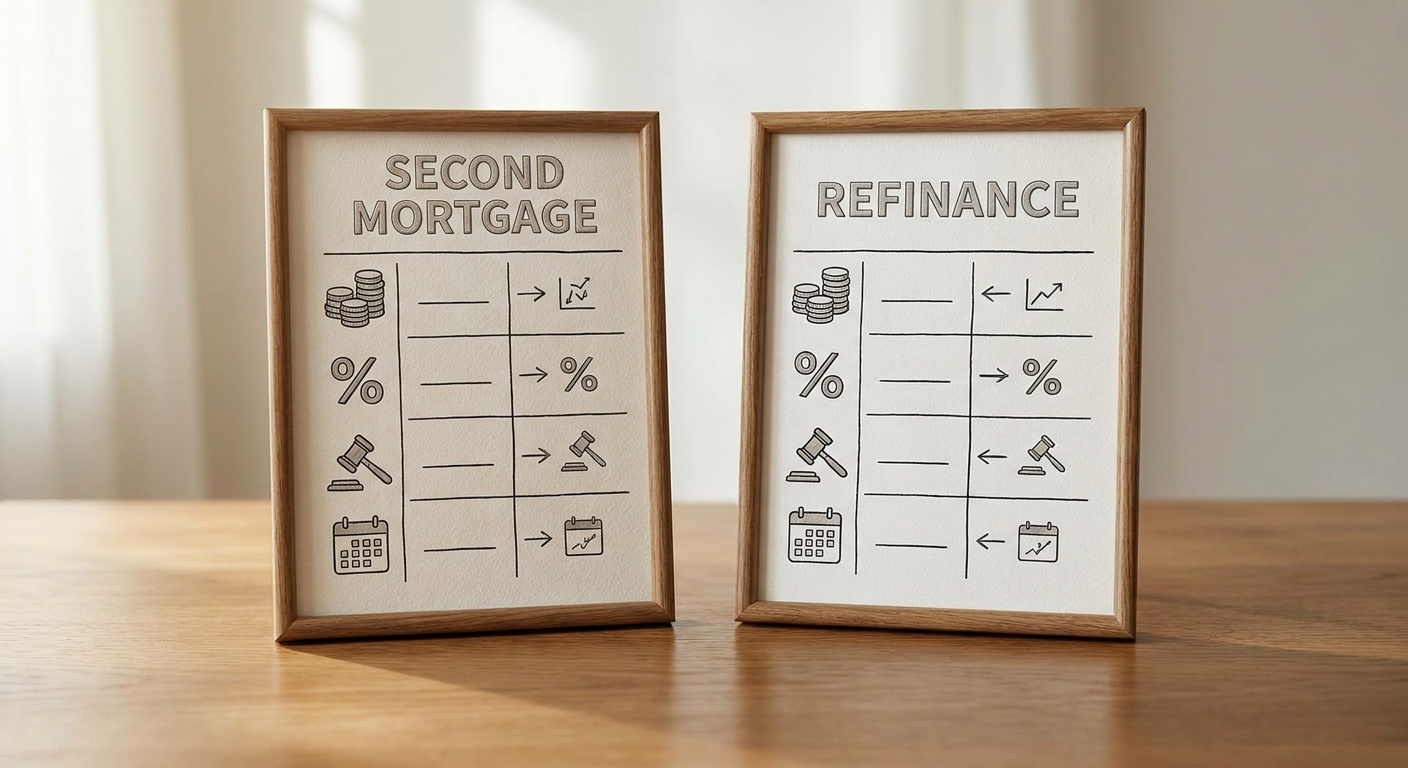
At a high level, a second mortgage adds a loan while leaving your first mortgage untouched. Breaking your mortgage replaces the existing loan entirely. This leads to several practical differences:
- Number of loans: A second mortgage means two payments each month. Breaking your mortgage leaves you with one payment.
- Impact on existing term: A second mortgage preserves your current rate and maturity date. Breaking your mortgage ends that term early and starts a new one.
- Penalties: A second mortgage does not trigger a penalty on your first mortgage. Breaking your mortgage may trigger a significant prepayment penalty.
- Interest rate: A second mortgage typically has a higher rate than a first mortgage, while a refinance may get you a lower rate than your existing one, especially if market rates have dropped.
- Qualification process: Refinancing often requires a full application with stress-test qualification. A second mortgage may be available through alternative lenders with more flexible criteria, but at a higher cost.
Advantages and Disadvantages of a Second Mortgage
Advantages of Taking Out a Second Mortgage
- Keep your existing rate and term: If you locked in a low rate, you avoid losing it and any prepayment penalty.
- Faster access to funds: Second mortgages can often be approved and funded more quickly than a full refinance, especially with private lenders.
- Flexible loan amount: You borrow only what you need, separate from your main mortgage balance.
- Potential to consolidate high-interest debt: The rate on a second mortgage is usually lower than credit cards or unsecured lines of credit, even if it is higher than a first mortgage.
Disadvantages of Taking Out a Second Mortgage
- Higher interest rate: Because the lender is in second position, the rate is often noticeably higher than your first mortgage.
- Two monthly payments: Managing two mortgages with different due dates and terms adds complexity and risk if your budget is tight.
- Increased overall debt load: Your total housing debt rises, which can affect future borrowing and your debt-to-income ratio.
- Foreclosure risk: Missing payments on either mortgage can lead to the lender starting foreclosure, even if you are current on the first mortgage.
When to Choose Each Option
When a Second Mortgage Is the Better Option
Choose a second mortgage if you are mid-term with a low fixed rate and breaking it would trigger a costly penalty. It is also a good fit if you need funds quickly for a renovation, debt consolidation, or investment, and you do not want to restart your amortization or lose your current terms. If a traditional lender declined your refinance application, a second mortgage through an alternative lender may still be possible, though you must weigh the higher cost.
When Breaking Your Mortgage (Refinancing) Is the Better Option
Breaking your mortgage makes sense when current rates are lower than your existing rate and the savings cover the penalty within a reasonable time. It is also the better route if you want one single payment, need to borrow a large amount that would be awkward to split across two loans, or you are already near the end of your term and the penalty is small. Refinancing allows you to restructure the entire debt at one rate, which may be simpler and cheaper over the long term.
Qualifying for a Second Mortgage
Lenders look at three main factors for a second mortgage: your home equity, your income, and your credit history. You need enough equity so that the combined first and second mortgage stays within the lender’s maximum loan-to-value ratio, often around 80% of the home’s appraised value. Lenders also check that your total debt payments, including both mortgages, do not exceed their debt-service limits.
In our practice, we review your current mortgage terms, remaining balance, and penalty exposure before recommending any equity access strategy. That way you see both options side by side and understand the long-term effect on your cash flow.
You will need to provide proof of income, a current mortgage statement, and often a recent property appraisal. Because second mortgage lenders take on more risk, they may require a stronger equity cushion or a higher credit score than your first mortgage did.
Risks to Consider Before Taking Out a Second Mortgage
- You could lose your home: If you default on the second mortgage, the lender can start foreclosure proceedings, even if your first mortgage is paid on time.
- Dual payment strain: Two monthly payments may stretch your budget, leaving less room for unexpected expenses or income changes.
- Higher cost of borrowing: The higher interest rate on a second mortgage can offset the penalty you avoided by not breaking your first mortgage.
- Debt spiral potential: If you use the funds to pay off credit cards but do not change spending habits, you may end up with both new unsecured debt and a larger mortgage.
- Market value decline: If home prices fall, you may have little or no equity left, making it harder to renew or refinance later.

How to Decide: Second Mortgage vs. Breaking Your Mortgage
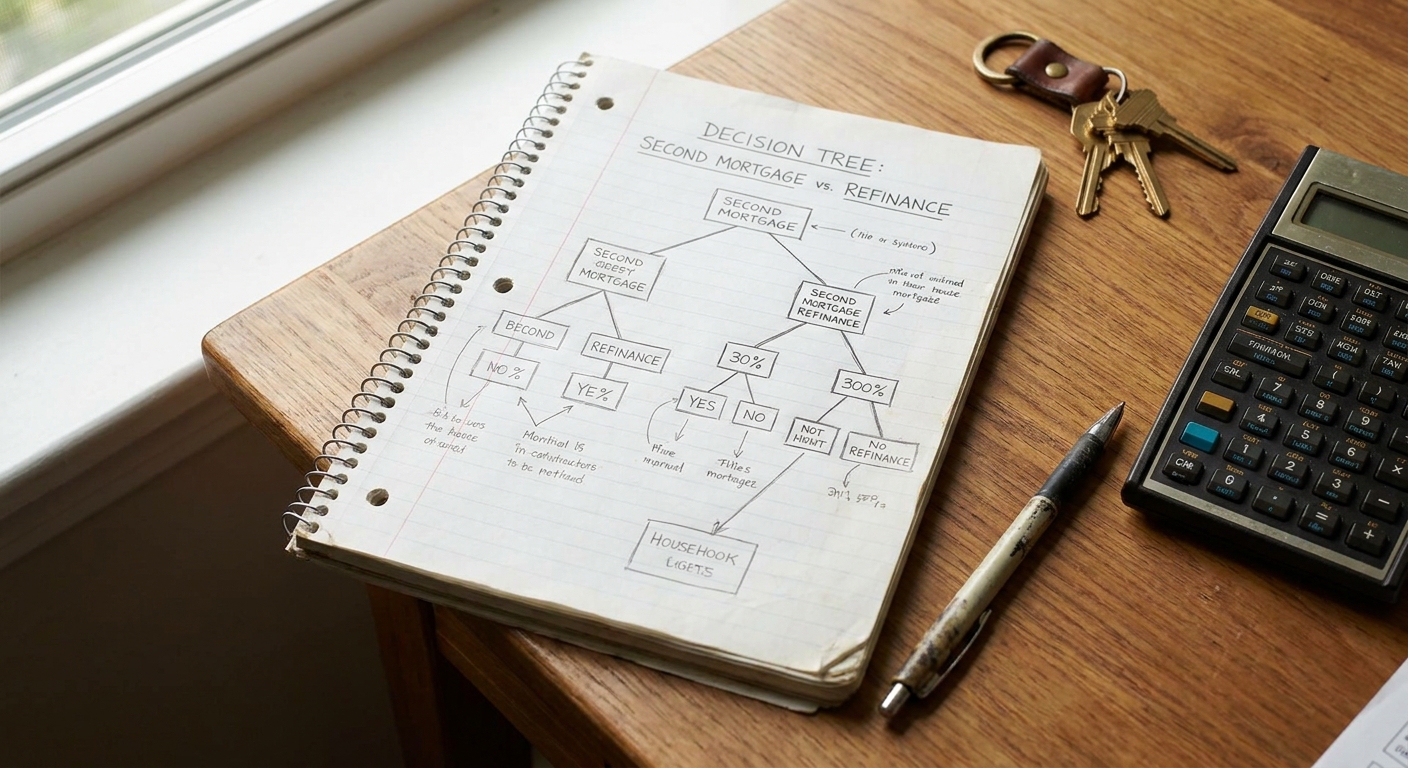
Start by calculating what it would cost to break your current mortgage, including any prepayment penalty and legal or administrative fees. Then compare that figure with the total extra interest you would pay on a second mortgage over the period you expect to hold it. Ask yourself these questions:
- How many months remain on my current term, and how much is the penalty likely to be?
- Would a refinance lower my overall interest rate enough to justify the penalty?
- Do I need a lump sum once, or ongoing access to funds?
- Can I comfortably manage two mortgage payments, or is one payment safer for my budget?
- What is my plan for repaying the extra debt, and does it improve my long-term financial position?
If you are unsure, run the numbers with a mortgage professional who can compare lender offers for both paths without pressure. The right choice is the one that preserves your financial stability and costs you the least over the time you will actually hold the debt.
Other Equity Access Options to Consider
Beyond a second mortgage and a refinance, you may also have access to a home equity line of credit (HELOC) or a home equity loan. A HELOC works like a revolving credit line secured by your home, letting you draw and repay funds as needed, often with interest-only payments during the draw period. A home equity loan is similar to a second mortgage but may have different terms or a fixed repayment schedule.
Each of these options has its own trade-offs in rate structure, flexibility, and repayment, so it is worth comparing all three before committing. A good starting point is to determine whether you need a lump sum or flexible access, and how quickly you can repay the borrowed amount.
Conclusion: Making the Right Choice for Your Financial Future
Choosing between taking out a second mortgage and breaking your current mortgage comes down to protecting your existing term and rate versus unlocking a new, potentially lower rate. A second mortgage keeps your first mortgage intact but adds a higher-rate second payment and increases your debt burden. Breaking your mortgage may cost you a penalty but can simplify your payments and give you one rate for everything.
We can help you compare your specific numbers and choose the path that preserves your term and fits your budget. Take the time to understand your equity position and long-term goals, and you will make a decision that supports your financial future.